
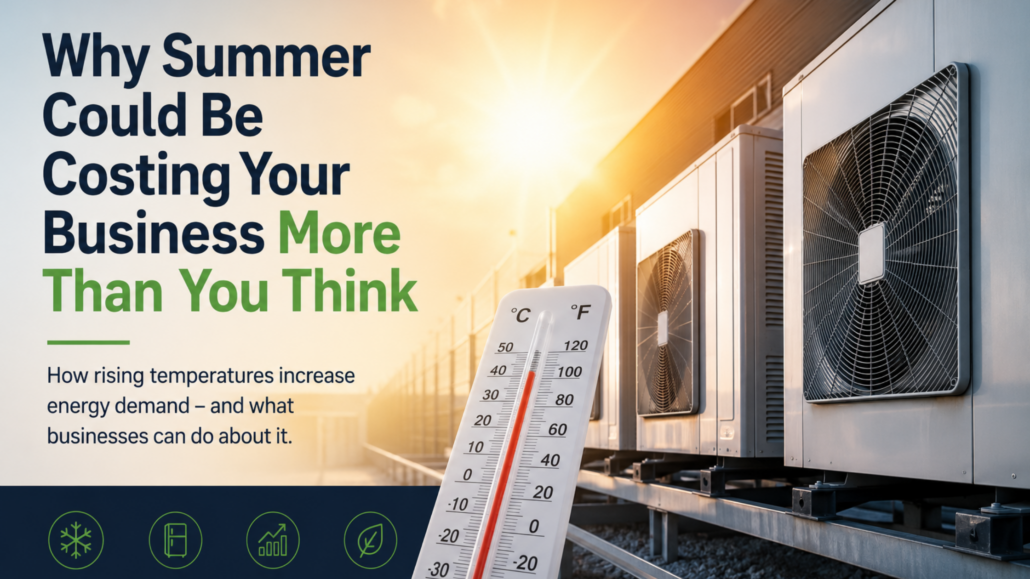
Why Hot Weather Is Driving Up Energy Bills – And What Businesses Can Do About It
As summer temperatures rise across the UK, many businesses brace themselves for an unwelcome side effect: higher energy bills.
For organisations that rely on refrigeration, air conditioning or temperature-controlled environments, warmer weather places additional strain on cooling systems, increasing electricity consumption and operational costs. While this seasonal spike may seem unavoidable, understanding why it happens is the first step towards reducing its impact.
Why Do Cooling Systems Use More Energy in Hot Weather?
Refrigeration and HVAC (Heating, Ventilation and Air Conditioning) systems work by transferring heat from inside a building or refrigerated space to the outside environment.
When external temperatures increase, this process becomes less efficient.
The greater the difference between the desired indoor temperature and the outdoor temperature, the harder compressors, fans and condensers must work to remove heat. As a result, equipment runs for longer periods, consumes more electricity and experiences greater wear and tear.
During prolonged periods of hot weather, even a small increase in ambient temperature can have a significant impact on energy consumption.
Which Businesses Are Most Affected?
While almost every commercial building experiences higher cooling demands during the summer, some industries feel the effects far more than others.
Supermarkets and Retail
Food retailers operate refrigeration systems around the clock to keep products fresh and comply with food safety standards. Display cabinets, walk-in cold rooms and freezers all have to work harder when store temperatures rise and customer footfall increases.
With refrigeration accounting for a significant proportion of a supermarket’s electricity consumption, even modest efficiency improvements can lead to substantial cost savings.
Hotels and Hospitality
Hotels face a double challenge during the summer months.
Guest rooms require comfortable air conditioning, while kitchens, bars, restaurants and cold storage facilities all generate additional heat that cooling systems must remove.
Higher occupancy levels during peak holiday periods can further increase demand, leading to greater energy consumption precisely when electricity costs are already under pressure.
Restaurants and Commercial Kitchens
Commercial kitchens naturally produce large amounts of heat from ovens, grills and cooking equipment.
Combined with warmer outdoor temperatures, HVAC systems must work continuously to maintain a comfortable environment for both customers and staff. Refrigeration units storing fresh ingredients also operate under greater strain, increasing overall electricity usage.
Food Production and Manufacturing
Temperature control is critical throughout food production and manufacturing processes.
Whether cooling production lines, maintaining chilled storage or protecting sensitive ingredients, manufacturers depend on reliable refrigeration systems operating efficiently at all times.
As temperatures rise, cooling equipment often runs continuously to maintain strict operating conditions, resulting in increased energy costs and accelerated equipment wear if systems are not operating efficiently.
Rising Temperatures Don’t Have to Mean Rising Costs
Many businesses assume higher summer electricity bills are simply unavoidable.
In reality, while increased cooling demand is inevitable, unnecessary energy waste is not.
Ageing equipment, inefficient control systems, poorly maintained refrigeration assets and fluctuating electrical supply can all cause cooling systems to consume more energy than necessary.
Small inefficiencies that go unnoticed during cooler months often become far more expensive during periods of sustained warm weather.
Regular monitoring and optimisation can help businesses identify where energy is being wasted and ensure cooling systems perform as efficiently as possible.
Taking a Smarter Approach to Energy Efficiency
Reducing energy consumption isn’t always about replacing existing equipment.
Many organisations achieve meaningful savings by improving how their current systems operate through better monitoring, optimisation and energy management.
Understanding where electricity is being used, identifying inefficiencies and making informed operational improvements can help reduce costs while maintaining the performance and reliability businesses depend upon.
As energy prices remain unpredictable and sustainability targets become increasingly important, improving energy efficiency is no longer just an environmental initiative—it’s a commercial advantage.
How Emissis Can Help
At Emissis, we help organisations reduce energy consumption without compromising operational performance.
Through our enPact energy optimisation solutions, we work with businesses across sectors including retail, hospitality, food production and manufacturing to identify hidden energy waste and improve the efficiency of existing systems.
Our technologies and services include refrigeration optimisation, voltage optimisation, power quality improvement and real-time energy monitoring, enabling organisations to gain greater visibility of their energy use while reducing operating costs and carbon emissions.
Whether you’re preparing for another busy summer or looking to improve year-round efficiency, our team can help you understand where your energy is going—and how to make every kilowatt work harder.
To find out how Emissis can support your organisation’s energy efficiency goals, get in touch with our team today.